
The catering market in Poland is already worth tens of billions of złoty, and globally it exceeds $200 billion and continues to grow rapidly. It’s important to remember, however, that this is a demanding industry where a passion for feeding others is simply not enough. An expert from Mazurkas Catering 360°, a company that has been delivering catering and event projects for 25 years, emphasizes that entering the catering business requires not only culinary skills, but also strong business acumen and determination.
Corporate events and so-called food outsourcing are driving the catering industry to grow at a rate of 6.4% annually. While the exact number of catering companies in Poland is difficult to determine—partly because many operate simultaneously as restaurants or event agencies—data from Statistics Poland (GUS) suggests the market includes several thousand entities. This number continues to rise. Between 2020 and 2025, the market grew at an annual rate of over 13–15%, showing how quickly the industry is professionalizing and scaling.
“Very often, it all starts with a visit to a restaurant. You enjoy a great meal in a pleasant setting and think: I’ll open my own café, restaurant, or catering business. In reality, though, vision and enthusiasm are not enough. What matters is a well-prepared business plan, the right team, and several key elements working together: food quality, a strong head chef, and effective marketing. Only their combination creates a stable and growing business. It’s also important to remember that this is a highly demanding industry—often operating 365 days a year,” says Wiktoria Mrozek, Catering Sales Manager at Mazurkas Catering 360°.
Quality over quantity
Catering operates under different rules than restaurants. Beyond the food itself, there is a significant logistical layer: transport, maintaining food quality during delivery, organizing kitchen facilities at event locations, and managing large teams. Catering companies must also have the right infrastructure—equipment, tableware, heating systems, and logistical support.
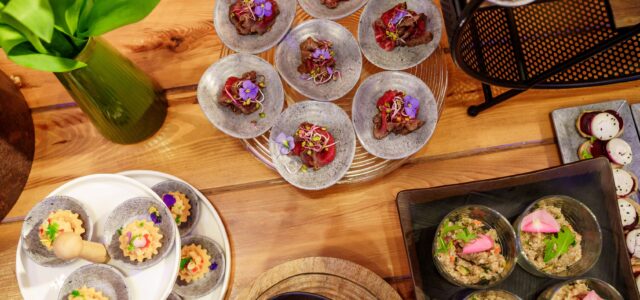
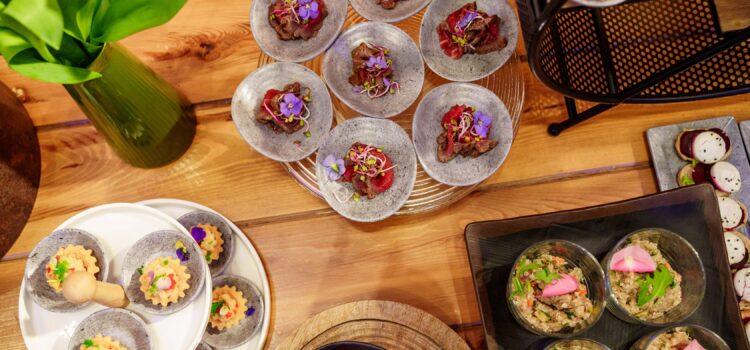
“Many people think catering is just about preparing food and delivering it. There’s some truth to that, but when you add rising customer expectations, everything becomes far more complex,” emphasizes Wiktoria Mrozek. “The days of ‘by-the-weight’ catering and overflowing platters are over. Today, catering is scenography—the food must be as photogenic as it is delicious and must align with the entire event concept,” she adds.
Cost pressure
Today, the catering industry operates under increasing cost pressure. Service prices in Poland are rising faster than overall inflation—around 4.8% annually compared to 2.1% for the broader economy—and in recent years the food service sector has also experienced sharp increases in food prices. At the same time, labor costs are rising, with wages in Poland growing at a rate of 6–7% annually, which is crucial in a labor-intensive industry. As a result, companies are facing margin pressure, since not all costs can be fully passed on to clients.
“In catering, a growing share of costs today comes not from the food itself, but from organizing the entire service. In large-scale projects, operational costs—such as logistics, staff, and infrastructure—can account for a significant portion of the price, often comparable to the cost of the food products themselves. There are also ‘reverse logistics’ costs—a plate doesn’t return to the kitchen on its own; it has to be collected, washed, and dried. This means that despite market growth, maintaining profitability requires very strong cost control and scale,” the expert explains.
The art of managing details
Rising customer expectations and cost pressure are turning catering into one of the more demanding business models today. It’s no longer just about preparing good food—it’s about managing a complex chain of processes.
“Today, it’s not enough to cook well. You have to manage the entire process—from sales, through production, to event execution. This means coordinating the work of many people, ensuring logistics run smoothly, maintaining food quality at every stage, and reacting to changing conditions during execution. Every detail matters. Because in catering today, you’re not just selling food—you’re selling the ability to consistently deliver quality under any circumstances,” concludes Wiktoria Mrozek.

Marcin

Today’s catering is more than just a plate
Lifestyle Apr 30, 2026

Labor Day at a turning point
Praca Apr 30, 2026


