
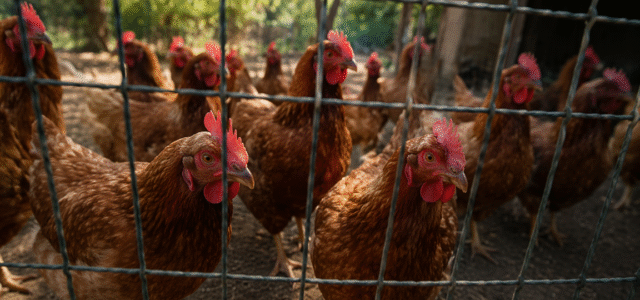
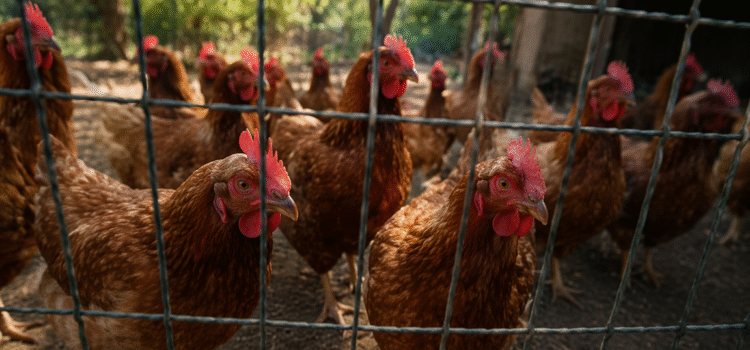
Data from the Chief Veterinary Inspectorate are alarming. Since the beginning of the autumn–winter season, more than 80 outbreaks of avian influenza have already been detected in Poland. At the same time, the World Health Organization (WHO) warns of a possible mutation of the virus – its increasing ability to infect mammals is a signal that the pathogen may soon spread easily between humans. This is the moment when the avian influenza epidemic begins to pose a real threat to Poland’s safety.
Containing the wave of infections is not an easy task. Although media attention and public opinion are rightly focused on the work of veterinary services, there is a sector operating in the shadows without which the entire sanitary protection system would collapse within a few days. This refers to the rendering industry – plants processing animal by-products (ABPs). It is they that constitute the last line of defense for the country’s sanitary safety.
Eliminating the threat at its source
The issue of managing by-products from food production rarely makes front-page headlines. Yet professionalism in this area is one of the key conditions for maintaining the country’s epidemiological stability. In crisis situations, rendering companies act as a strategic “sanitary emergency service”. Logistics and technology are crucial here: infectious material must be removed from farms and neutralized in a way that is completely isolated from the environment, before the virus spreads to neighboring farms or wild birds.
– We must be aware that many infectious diseases can be transmitted directly to humans, which is why, as an industry, we must react immediately, eliminating outbreaks at their very early stage. Fighting an epidemic is not only a matter of public health. It is, above all, a fight for economic stability. Even if a given virus does not directly threaten us, it can still affect our lives. Disruptions in poultry production may directly impact food prices and availability. Professional processing is therefore essential – emphasizes Marcin Cabaj, CEO of the rendering company Zbiornica Skórzec.
A critical link in the food system
Specialized processing plants are present wherever humans produce food. Their support goes far beyond the agricultural and industrial sectors – their clients also include local governments, schools, and even military structures. Cooperation with the army is particularly important and includes strict procedures for removing biological waste from both stationary and field kitchens, directly affecting the readiness and sanitary safety of units. The entire process – from raw material collection to final processing – takes place under constant veterinary supervision, based on strict national and EU standards. If this mechanism were to suddenly stop functioning, the sanitary consequences would be immediate.
– People need to eat, and every production and consumption process generates waste that must not be left unattended. It is estimated that around 5 million tons of food are wasted annually in Poland! If the processing system stopped functioning, these materials would most likely end up in illegal dumping sites or forests, which would be an environmental disaster. It is we who close this loop in a safe and controlled way – notes Marcin Cabaj.


